The Monday Morning Clause: What Cloud Support Tiers Really Promise UK Buyers

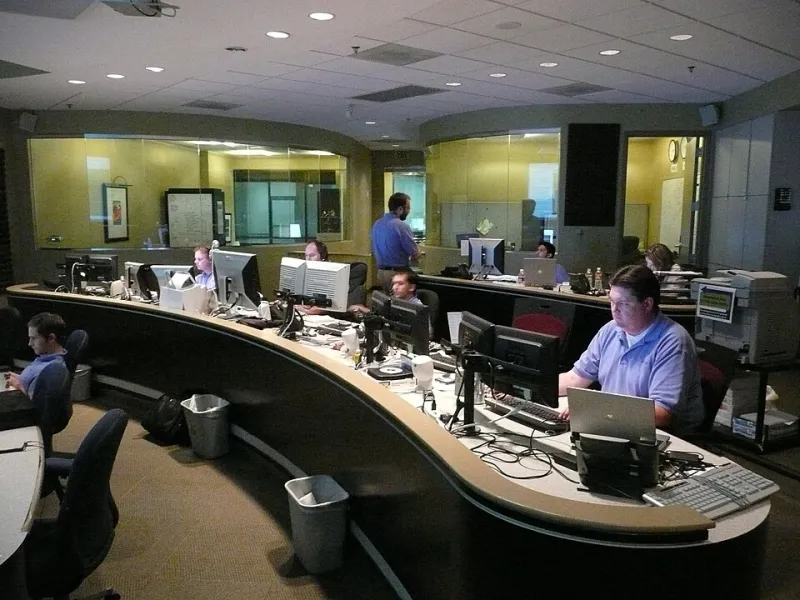
Photo: Staff Sgt. Robert Barnett, Public domain, via Wikimedia Commons
Cloud support plans are sold with reassuring words: follow-the-sun, priority response, dedicated escalation. Then something breaks at 18:00 on a Friday, and you discover that ‘24/7’ meant the ticket form was open, not that anyone was awake. For UK teams, the gap between a support tier and actual support is often hidden in definitions. This is a buyer’s guide to reading the fine print before you need it.
First, separate the ticket queue from the rescue team
A support plan can give you several things: a place to log issues, a response-time promise, access to technical engineers, escalation rights, or a named account team. Those are not the same thing.
A portal that accepts a ticket at any hour is not the same as an engineer being available at any hour. An automated acknowledgement is not a response. A response is a human engagement with your case, ideally one who can do something beyond copy-pasting a knowledge-base link.
When you compare tiers, write down what you are actually buying. Is it intake? Is it triage? Is it troubleshooting? Is it someone who can join a bridge call and speak to your team? The price may look similar, but the operational difference is enormous.
Severity definitions are where the wiggle room lives
Every support plan has severity levels. The useful question is not whether the table exists, but who decides the severity and whether you can challenge it.
One vendor’s ‘critical’ may mean a total outage. Another’s may mean any issue affecting production. A third may reserve ‘critical’ for a list of named services, which might not include the one you depend on most. Read the examples. Read the exclusions. Read what happens if you disagree with the assigned severity.
Ask what evidence the vendor needs. Does a production issue count if it affects only some users? Does a degraded service count if there is a workaround? Does a security concern jump the queue? These details decide whether your urgent problem gets urgent treatment or joins a queue behind someone else’s definition of important.
Response time is not a fix time
This is the oldest trick in the support brochure. A 15-minute response time sounds excellent until you realise it only promises that someone will reply within 15 minutes. It does not promise a fix, a workaround, or even a meaningful next step.
Response time and restoration time are different products. A vendor may commit to responding quickly while leaving the actual resolution to a best-efforts process. That can be perfectly reasonable, but you should know which one you are buying.
Ask for the restoration target, if one exists. Ask how it is measured. Ask what happens when the target is missed. Service credits are not a fix, but they are a signal of what the vendor is willing to put in writing. If the only thing guaranteed is a reply, price the plan accordingly.
UK hours, bank holidays and the Monday morning clause
‘Business hours’ is a phrase that needs translating. For a UK team, it usually means Monday to Friday, 9am to 5pm, excluding bank holidays. For a global vendor, it may mean a different time zone, a different holiday calendar, or a follow-the-sun model where the UK is covered by an overnight team with limited authority.
Ask for the coverage window in writing, including bank holidays. Ask whether the UK team is available or whether calls route to another region. Ask whether the same severity definitions apply at 2am as they do at 2pm. A plan that provides 24/7 intake but UK-hours engineering is not useless, but it is not the same as round-the-clock rescue.
The Monday morning clause is the practical test. If you log a priority-two issue at 17:30 on a Friday, when does the clock start? Does the weekend count? Does a bank holiday pause the response timer? If the answer is ‘the next business day’, you have found the clause that matters.
Escalation rights: who can you actually call?
Escalation is not a phone number. It is a path with authority at the end of it. A support plan should tell you who you can escalate to, how quickly, and what that person can do.
Ask whether you get a named technical account manager or a shared pool. Ask whether escalation is available outside UK hours. Ask what happens if the first-line engineer cannot solve the issue. Ask whether you can request a manager review without waiting for a formal complaint.
Also ask about communication during a major incident. A support tier that fixes the problem but tells you nothing for six hours is still a business risk. Status updates, bridge calls and a named incident contact can matter as much as the technical fix.
The buyer’s checklist
Before you sign, get answers to these questions in writing:
- What exactly does ‘24/7’ cover: intake, triage, engineering or escalation?
- What are the severity definitions, and who assigns severity?
- Is the response time measured in clock hours or business hours?
- Do UK bank holidays pause the clock?
- Is response time separate from restoration time?
- What restoration target, if any, is committed?
- Who can you escalate to outside UK office hours?
- Do you get a named contact or a shared queue?
- What happens if the vendor disagrees with your severity?
- Are service credits automatic or do you have to claim them?
- Does the plan cover the services you actually run, including managed services and third-party dependencies?
- Can you test the escalation path before you need it?
Price the support, not just the subscription
Support tiers often look like a small line item next to compute and storage. In practice, they are part of the cost of running the service. A cheaper tier that leaves you waiting until Monday may be false economy if your business runs at weekends. An expensive tier that gives you a named contact and real escalation may be worth it if a two-hour outage costs more than the annual difference.
That is the buyer’s trick: compare the plan against the cost of not having it. Ask what a delayed fix would cost in lost sales, missed service levels or staff overtime. Then read the support description again. The words ‘24/7 support’ will look a lot less comforting, and a lot more like a question you should have asked before signing.