The Substation Before the Invoice: Reading UK Infrastructure Signals Like a Cloud Buyer
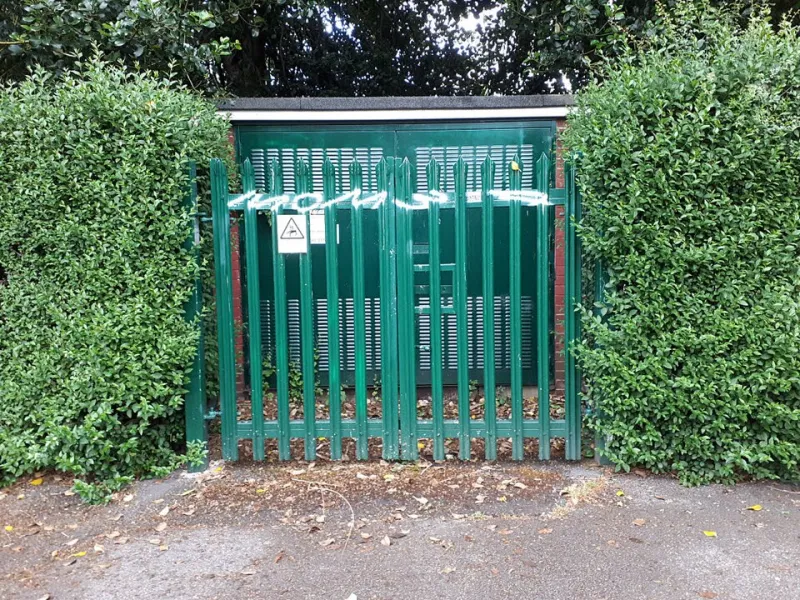
Photo: Stephen Craven , CC BY-SA 2.0, via Wikimedia Commons
Cloud regions feel abstract. You pick a region in a console, tick a box, and a workload appears. But behind that checkbox is a very physical chain: land, power, cooling, fibre, water, planning permission and a grid connection. When any link slips, the first you hear about it is often a longer provisioning time, a quiet price change or a support engineer saying capacity is tight in that availability zone.
The good news is that the chain leaves a paper trail. UK planning portals, distribution network operator capacity statements and environmental permit registers are public. You do not need to become a town planner. You need a quarterly habit and a filter for what matters.
Start with the council planning portal
Search your provider's region or the towns around it. Useful terms: data centre, substation, grid substation, generator, cooling, energy centre, fibre, cable. Read the officer report and the decision notice, not just the headline. An outline permission is not a building. Look for reserved matters, discharge of conditions and construction management plans. Those are the steps that turn a glossy announcement into steel on the ground.
Watch for conditions with dates. A noise limit, a generator testing schedule, a water discharge condition or a landscaped bund can delay commissioning. A project that keeps asking for more time to discharge conditions is not necessarily dead, but it is not ready either. That is a signal for your capacity planning.
Environmental permits are the sibling document. If a site needs a permit for back-up generators, cooling water discharge or fuel storage, the application and consultation show what the operator intends to run and when. A permit consultation is not a launch date, but it is a decent clue about the direction of travel.
The grid queue is the real launch date
Data centres are power stations in disguise. The local distribution network operator, or DNO, publishes capacity maps and statements. These are not light reading, but they are more honest than a press release. Look for constrained areas, reinforcement schemes, flexible connection offers and queue positions.
A stalled substation upgrade in Slough or a refused data centre in Newport does not just affect the applicants. It affects everyone downstream. If reinforcement slips, existing sites may be asked to flex, new connections get later dates, and providers get choosier about which workloads they accept. That can show up as longer lead times for specific instance families, tighter limits on GPU capacity, or less willingness to offer short-term commitments.
Read the DNO documents for money and dates. A connection offer with a specified capacity, a signed agreement and a reinforcement completion date is a hard signal. An expression of interest, a speculative application or a duplicate queue entry is noise. The same applies to planning: a press release saying a site will be world-leading is noise; a reserved matters application with a named contractor and a construction traffic plan is a signal.
Three tests for a real signal
First, repetition. Does the same project appear in planning, environmental permits and the grid queue? One appearance is a rumour. Three is a timetable.
Second, money. Has someone paid for a connection offer, submitted a discharge of conditions fee or appointed a contractor? Infrastructure follows cash.
Third, conditions. Are there dated obligations for noise, water, transport or grid reinforcement? Dated conditions create a schedule you can track. Vague aspirations do not.
What this means for your cloud bill
Capacity crunches rarely arrive as a dramatic outage. They arrive as friction. Provisioning takes longer. The provider pushes you towards a different availability zone or region. Spot capacity gets thinner. Renewal conversations include new minimum commitments. None of that is necessarily malicious; it is the commercial response to physical constraint.
For UK teams, the practical move is to ask better questions. Instead of asking whether a region is available, ask which availability zones have headroom for your specific instance types. Ask what happens to your committed spend if capacity is constrained. Ask whether the provider can reserve capacity for a defined period and what notice you get before a migration.
Then look at your own architecture. If one region is doing all the work, a constrained substation 40 miles away is your problem. Keep portable backups, test a secondary region, and avoid signing multi-year commitments for workloads you have not measured.
Build a 20-minute quarterly habit
Pick five to ten locations that matter to your cloud estate. Check the council planning portal, the DNO capacity map and the environmental permit register. Note the date, the project and the stage. Keep a simple register. You are not looking for certainty; you are looking for direction.
The planning committee will not send you an invoice. But it will tell you where the next one is coming from. Read the paperwork before the price rise, and your cloud strategy gets a little less surprised.